



The Complete Guide to Building a Procurement-Sales-Inventory Management System: Analyzing 3 Paths from Excel to AI agents!
"We have enough stock, but can't ship out goods." "A miscalculation in procurement reconciliation led to a ¥10,000 overpayment to a supplier." "Sales data doesn't match finance records, forcing overtime checks at month-end." – The root cause of these common operational headaches for businesses is the lack of an efficient procurement-sales-inventory management system.
Today, we'll break down: What is the core logic of such a system? And how can businesses of different scales build one that suits their needs?
I. What is a Procurement-Sales-Inventory Management System? – Understanding the "Core Link" in Business Operations
1. Core Definition: Covering the "Procurement-Sales-Inventory-Finance" Full Workflow, Creating a Business Closed Loop
It's not merely a record of "Procurement, Sales, Inventory," but a full-process management system integral to business operations, encompassing four key dimensions:
•Procurement Management (Inbound): From supplier selection and purchase requisition to order placement, receipt inspection, and payment settlement. The core principle is "procure as needed, control costs." For example, a manufacturer generates purchase orders based on production plans to avoid raw material overstocking.
•Sales Management (Outbound): From customer profile creation and quotation to order confirmation, outbound shipping, and payment collection/reconciliation. The focus is "quick response and accurate delivery." A trading company, for instance, uses real-time inventory syncing to prevent overselling and customer complaints.
•Inventory Management (Storage): Covers goods receipt, storage, transfer, counting, and loss handling. The core is "accurate book-to-physical counts and optimized turnover." Examples include retailers using expiration alerts to reduce deadstock, or manufacturers balancing stock across multiple warehouses.
•Financial Management (Finance): Automatically links procurement payables and sales receivables, generating statements, invoices, and accounting vouchers. This reduces manual entry errors and meets compliance/audit requirements.
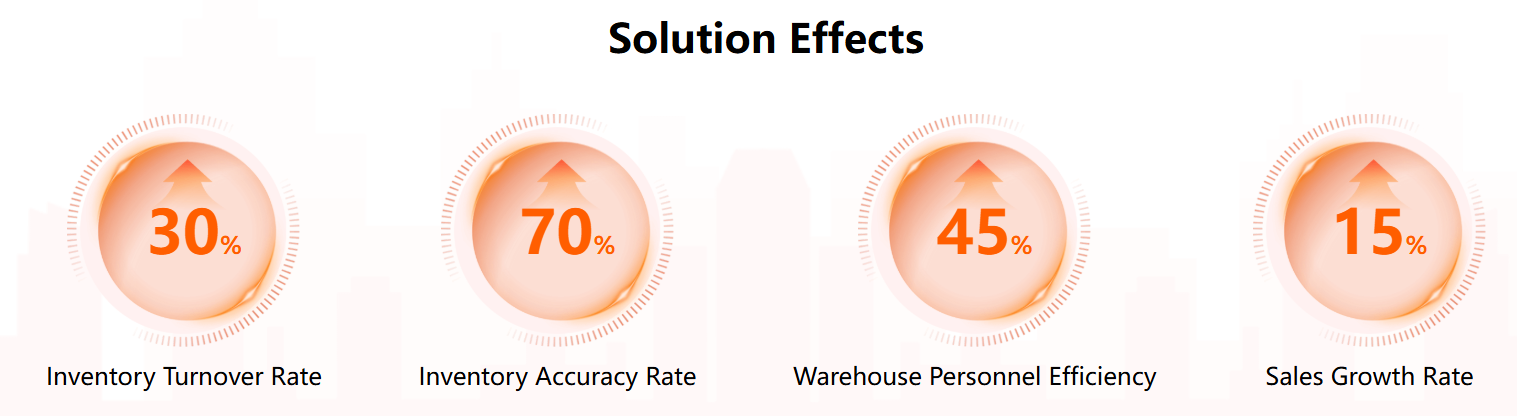
A hardware manufacturer using Kuailu Cloud integrated these four dimensions, shortening procurement cycles by 30% and improving financial reconciliation efficiency by 90%, eliminating data silos.
2. Core Processes: Three Key Flows Solving Collaboration Inefficiency
A practical system is built around three core flows, addressing poor cross-department collaboration and data inconsistency:
•Procurement Flow: Vendor Setup -> Purchase Request -> Smart Price Comparison -> Order Generation -> Receipt Inspection -> Returns -> Payable Reconciliation -> Payment. Kuailu Cloud supports "auto-triggering purchase requests based on stock levels." A building materials company using it reduced blind procurement by 40%.
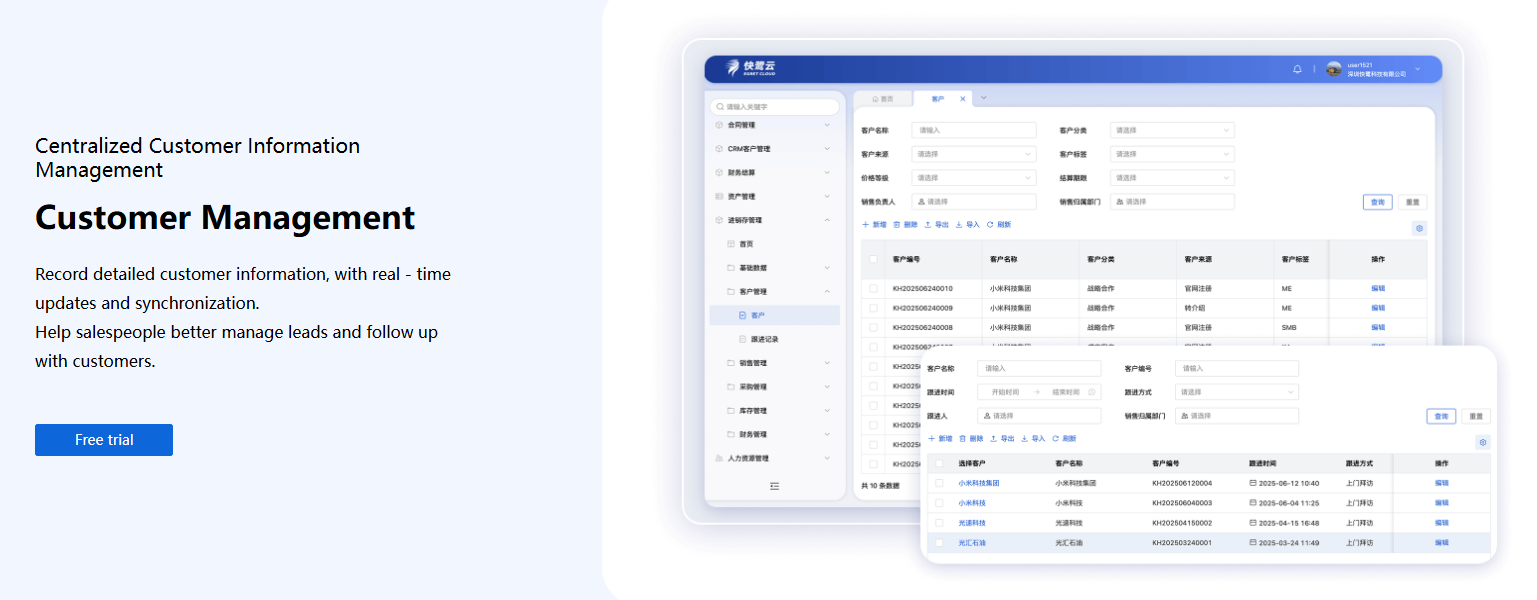
•Sales Flow: Customer Management -> Quotation Generation -> Sales Order -> Outbound Review -> Logistics Tracking -> Returns -> Receivable Reconciliation -> Payment. The system auto-checks stock. An e-commerce company reduced shipping error rates from 5% to 0.3%.
•Warehouse Flow: Warehouse Setup -> Location Planning -> Goods Receipt -> Barcode Picking -> Inter-Warehouse Transfer -> Regular Counting -> Loss Registration. Kuailu Cloud supports "mobile barcode counting + auto-generated surplus/shortage reports," reducing counting time from 3 days to 2 hours.
3. Core Value: Why Businesses Need This System
A quality system fundamentally solves 4 major pain points:
•Cost Reduction & Efficiency Gain: Through inventory alerts and procurement cost analysis, a food company reduced stockpiles by 25% and procurement costs by 12%.
•Data Collaboration: Replaces manual Excel tracking. Real-time sync of procurement, sales, warehouse, and financial data reduces cross-department communication time by 70%, eliminating repetitive data checks.
•Compliance Assurance: Full operation logging and automated financial voucher generation meet tax audit needs. Kuailu Cloud is certified for Level 3 Cybersecurity Classification, ensuring data security.
•Decision Support: Visual dashboards show sales trends, inventory structure, and customer contribution. Management grasps key operational data in 5 minutes without manual consolidation.
II. How to Build a Procurement-Sales-Inventory Management System? – Comparing 3 Paths for Efficient, Needs-Based Choice
Choosing a path depends on company size, budget, and business complexity. Analyze the pros/cons of these 3 mainstream paths to avoid pitfalls.
1. Manual Excel Recording: Only for micro-teams (<5 people). Low cost, no scalability.
•Pros: Zero cost to start, no technical barrier. Suitable for individuals or very small startups temporarily.
•Cons: Error-prone beyond ~500 records. No real-time collaboration (e.g., sales can't see live stock, causing overselling). No finance integration. A small shop once missed recording ¥12,000 in receivables due to an Excel formula error.
•Kuailu Cloud Suggestion: Use only as a temporary stopgap. Upgrade promptly as business grows to avoid data chaos hindering development.
2. Custom Development: For very large enterprises. Highly tailored but extremely costly.
•Pros: Perfectly fits complex needs, e.g., multi-plant coordination for conglomerates, multi-currency for MNCs, special industry compliance.
•Cons: Long dev cycle (3-6 months), high cost (¥100k - ¥1M+). Requires dedicated IT for maintenance (¥20k+/year). Costly/lengthy modifications. Very low cost-effectiveness for SMEs.
•Kuailu Cloud Suggestion: Only for companies with revenue >¥200M and highly unique processes. Most don't need the high cost of customization.
3. Low-Code Platform Build: Top choice for SMEs. Fast, Economical, Flexible.
•Pros: No coding needed; build via drag-and-drop. Platforms like Kuailu Cloud offer industry templates, enabling go-live in ~3 days. Cost is ~1/15th of custom development (Kuailu Cloud base version from ¥2999/year). Non-technical staff can modify processes quickly.
•Core Advantages Solving Traditional Pain Points:•High Adaptability: Kuailu Cloud supports custom fields (e.g., adding "Production Batch" for manufacturers, "Customs Info" for traders).•Easy Operation: Intuitive interface; staff proficient in ~1 hour. Warehouse staff scan goods in via phone; sales create orders remotely. Minimal training needed.•Secure & Reliable: Encrypted data, role-based permissions, private deployment options. Safe for sensitive industries like finance/law.•Continuous Iteration: Free updates. New features (AI procurement suggestions, e-signatures) included, adapting as business grows.
•Kuailu Cloud Suggestion: The preferred choice for 95% of growing businesses (10-500 people). Balances cost-effectiveness and flexibility for current and future needs.
III. Why Choose Kuailu Cloud? – AI + Low-Code, More Than Just Inventory Management
Kuailu Cloud's system, with its core advantages of "AI + Low-Code + Integrated Business-Finance," is the top choice for growing enterprises:
•AI Empowerment: Smart procurement suggestions, AI-powered reconciliation, voice assistant for queries/approvals. An electronics company reduced manual work by 60%.
•Multi-Platform Sync: PC, mobile, H5. Boss checks real-time data anytime; employees work remotely. Breaks geographical limits.
•High Cost-Effectiveness: Base version from ¥2999/year, includes 10-user pack & 300k data records. 30-day free trial. Low pressure for SMEs.
•Ecosystem Integration: Can connect with Kuailu Cloud's CRM, HR, Admin systems. One platform for full-process management, avoiding multi-system hassle.
Click now to schedule a Kuailu Cloud demo! Receive a free Industry-Specific Procurement-Sales-Inventory Solution(with real cases from manufacturing, trade, retail) plus data templates and tutorials. Ensure your system implementation is efficient and stress-free from start to finish