



Which ERP Systems Do Textile Factories Use? Tongwei Textile Chooses Kuailu Intelligent Office, Boosting Cross-Border Collaboration Efficiency by 80%
Under the Global Trade Pattern, the Textile Industry Faces Unprecedented Challenges
Cross-border production, data silos, and inefficient processes have become increasingly prominent, making traditional management models unsustainable. Digital transformation and AI low-code platforms have emerged as the core direction for textile enterprises to break through bottlenecks.
Tongwei Textile, a long-established Hong Kong-based textile enterprise, has set a successful example for the industry through its digital transformation journey. Leveraging Kuailu Cloud’s AI low-code platform, this enterprise operating across Hong Kong, Dongguan, Cambodia, and Vietnam has achieved an 80% improvement in global collaboration efficiency and a 97% inventory accuracy rate. It has become a benchmark case for cross-border textile enterprise management systems and provided a replicable practical path for the digital upgrading of traditional textile enterprises.
Industry Pain Points Converge, Making Digital Transformation Imperative
As a typical process-intensive industry, the textile sector involves multi-department and cross-regional collaboration across the entire chain—from fabric swatch development and yarn procurement to weaving, dyeing, and shipping. However, many enterprises still rely on outdated ERP systems and backward processes such as "Excel + messaging software," facing five core pain points:
- Invisible business progress: Sales teams lack visibility into production status, procurement teams are unaware of raw material availability, merchandisers are overwhelmed with follow-ups, and management lacks an integrated data dashboard for decision-making.
- Outdated systems hinder development: Real-time calculation of order costs and profits is not feasible, leading to significant delays in operational decisions, which fails to meet the core needs of smart factory management.
- Disparate cross-regional data: Data is scattered across Hong Kong, mainland factories, and overseas partners, relying on manual transmission and matching with high error rates. A cross-regional collaborative management system is urgently needed to break data silos.
- Chaotic warehouse management: Inventory data for yarn, grey fabric, and finished fabric is inaccurate, making multi-dimensional precise searches difficult. An intelligent warehouse management system has become a rigid demand.
- Unregulated information permissions: Core sensitive information lacks permission control, posing operational security risks and violating enterprise data security management norms.
Policy directives have further intensified the urgency of transformation. In June 2025, six ministries including the Ministry of Industry and Information Technology issued the Implementation Plan for the Digital Transformation of the Textile Industry, specifying that by 2027, the digitalization rate of key business links in above-scale enterprises will exceed 70%, and by 2030, the digital transformation of the textile industry empowered by next-generation information technology will achieve remarkable results.
This marks that digital transformation has evolved from an "encouraged direction" to an "industry standard." For traditional textile enterprises, transformation is no longer a choice but a matter of survival.
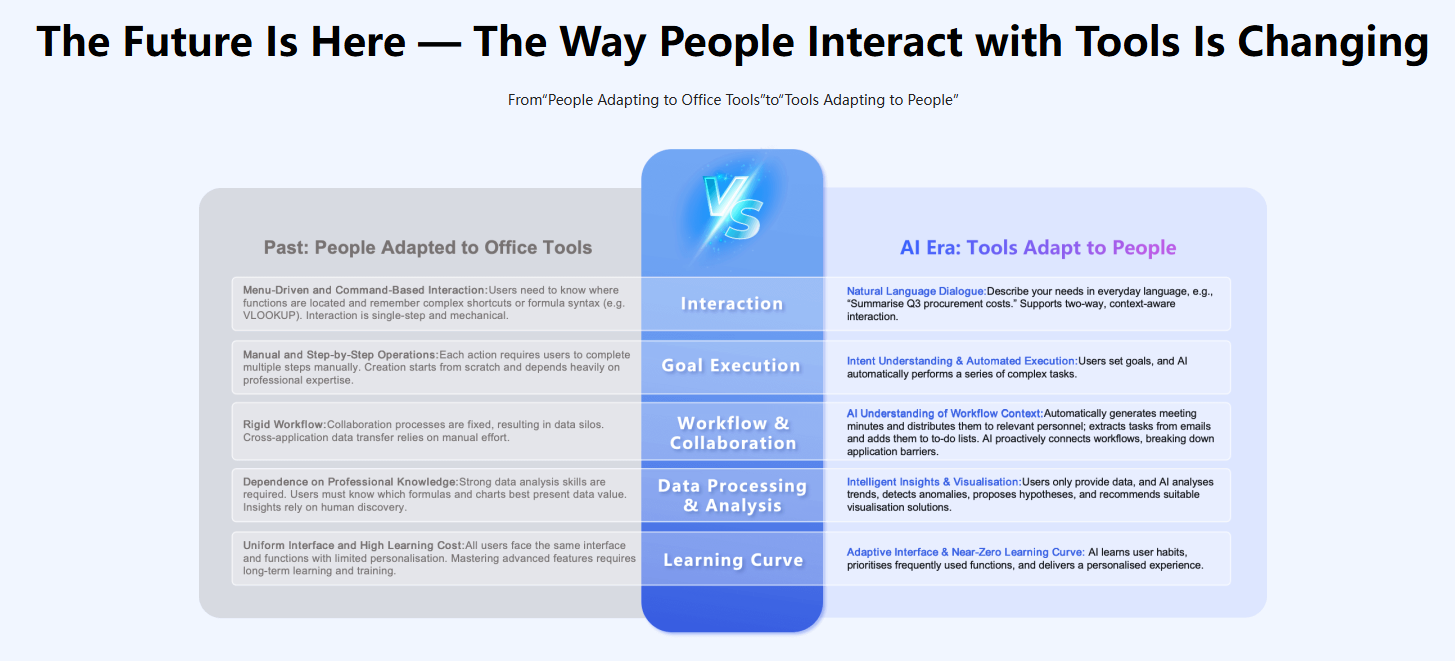
Kuailu Cloud’s Five Core Solutions to Address Textile Industry Pain Points
Tailored to the special needs of the textile industry, Kuailu Cloud has built an end-to-end integrated AI intelligent platform. Through the deep integration of low-code technology and AI, it fundamentally solves industry challenges:
- Full-process visual control: A dedicated textile business management system built on the low-code platform realizes digital management throughout the entire process from fabric swatch development to delivery. Managers at all levels can real-time monitor business progress via multiple terminals, constructing a "full-process visual digital factory."
- Intelligent data collaboration hub: By integrating AI recognition technology and GBPM processes, information barriers between Hong Kong, mainland, and overseas factories are eliminated. Important documents such as invoices and packing lists are processed automatically, significantly reducing manual verification time and improving cross-department collaboration efficiency.
- Precise warehouse management module: The inventory management system supports multi-dimensional precise searches by fabric type, weight, and process, enabling digital management of yarn, grey fabric, and finished fabric. Inventory data is updated in real time, with accuracy improved to 97%, effectively solving the industry-wide problem of "discrepancies between accounts and actual inventory."
- Integrated business-finance decision support: The AI accounting engine automatically links business and financial data, calculating costs, sales volume, and profits in real time to provide accurate data support for operational and management decisions.
- Secure permission management system: Based on the RBAC model, the permission control system achieves precise isolation of sensitive information. The electronic signature approval process ensures information security while improving approval efficiency.
Concrete results validate the value of digital transformation:
- 80% improvement in cross-department and cross-regional efficiency
- 50% reduction in time costs
- 25% increase in on-time order delivery rate
- 97% inventory accuracy rate
- 24/7 digital management throughout the entire process
In addition to Tongwei Textile, Kuailu Cloud also serves many other textile enterprises such as Dongguan Hecheng, focusing on solving common industry problems including disconnected cross-system data, opaque progress, and cumbersome processes. It has become the preferred brand for digital solutions in the textile industry.
Why Kuailu Cloud Is the Top Choice for Textile Enterprises’ Transformation?
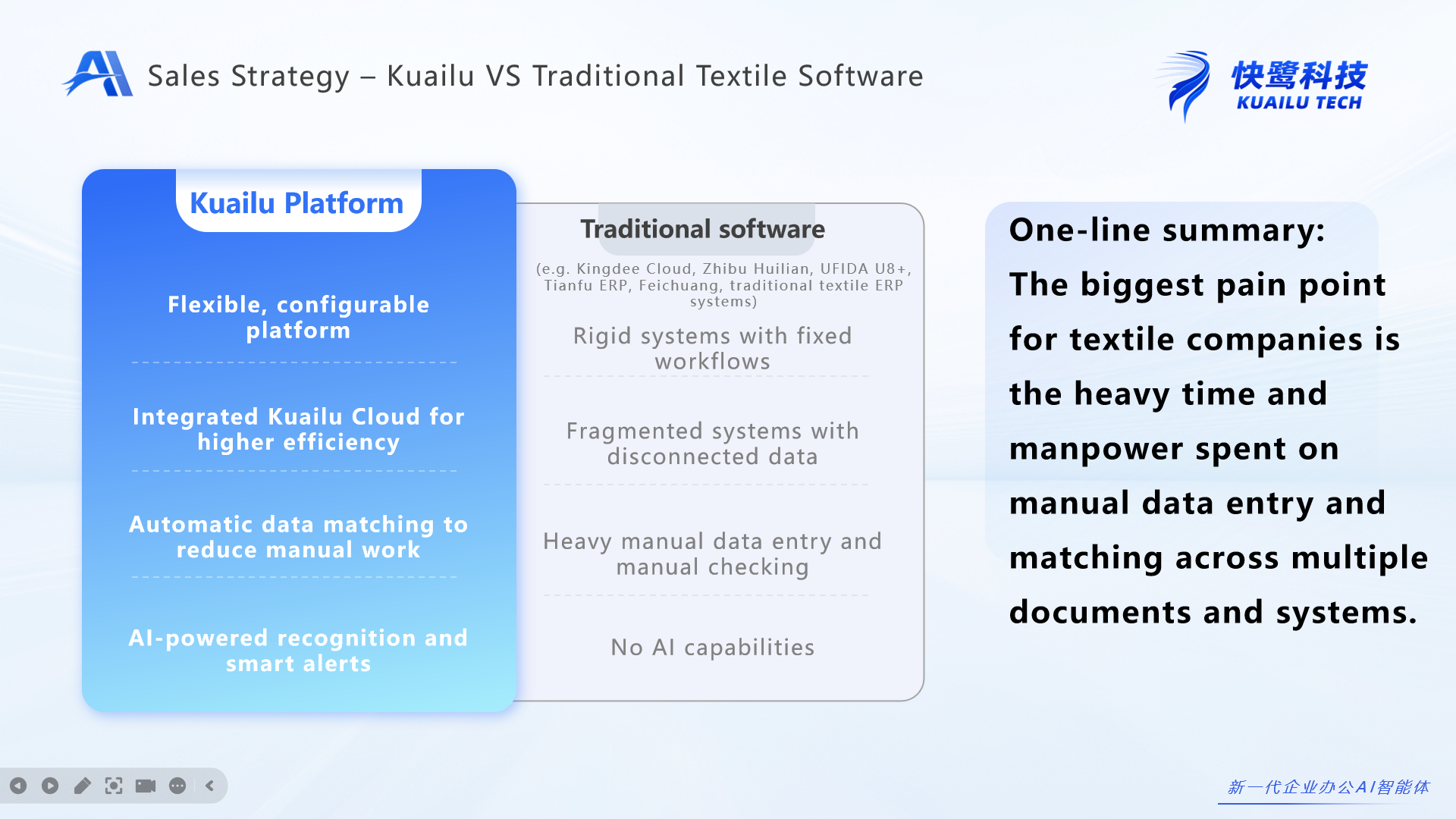 Digital Transformation Is Timely—Seize Market OpportunitiesAmid intensifying market competition and diminishing cost advantages, digital transformation has become an inevitable choice for textile enterprises to enhance supply chain collaboration capabilities and business responsiveness. AI intelligent office systems represented by Kuailu Cloud are helping more textile enterprises achieve "efficiency improvement and cost reduction" and move up the global industrial chain to high-value-added links.
Whether it is large and medium-sized textile enterprises with cross-border operations or traditional manufacturers plagued by outdated systems, Kuailu Cloud can provide customized digital transformation solutions for the textile industry. Taking action earlier will help enterprises gain an edge in future market competition!