



The AgaaS Era Has Arrived: A Decade-Look into Enterprise Software from Jensen Huang’s GTC 2026
At the NVIDIA GTC conference in March 2026, Jensen Huang delivered a paradigm-shifting assertion that sent ripples through the enterprise software industry: "Every SaaS company will transform into an AgaaS company. " AgaaS—Agent as a Service—represents the next evolutionary leap in how businesses interact with software.
Huang elaborated that future data centers will no longer function as mere repositories for file storage but will evolve into "Token factories"—production facilities where computational resources are converted into actionable intelligence. Enterprises will allocate AI capabilities based on Token budgets, much as they provision computing resources today.
This keynote was not merely technological forecasting; it represented a fundamental reconstruction of enterprise software's underlying logic. From Kuailu Intelligent Office's vantage point, we recognize this as more than a technological upgrade—it signifies a foundational shift in the human-tool relationship. The era of "humans adapting to tools" is giving way to "tools serving humans."
1. Fundamental Transformation: From "System of Record" to "System of Engagement"
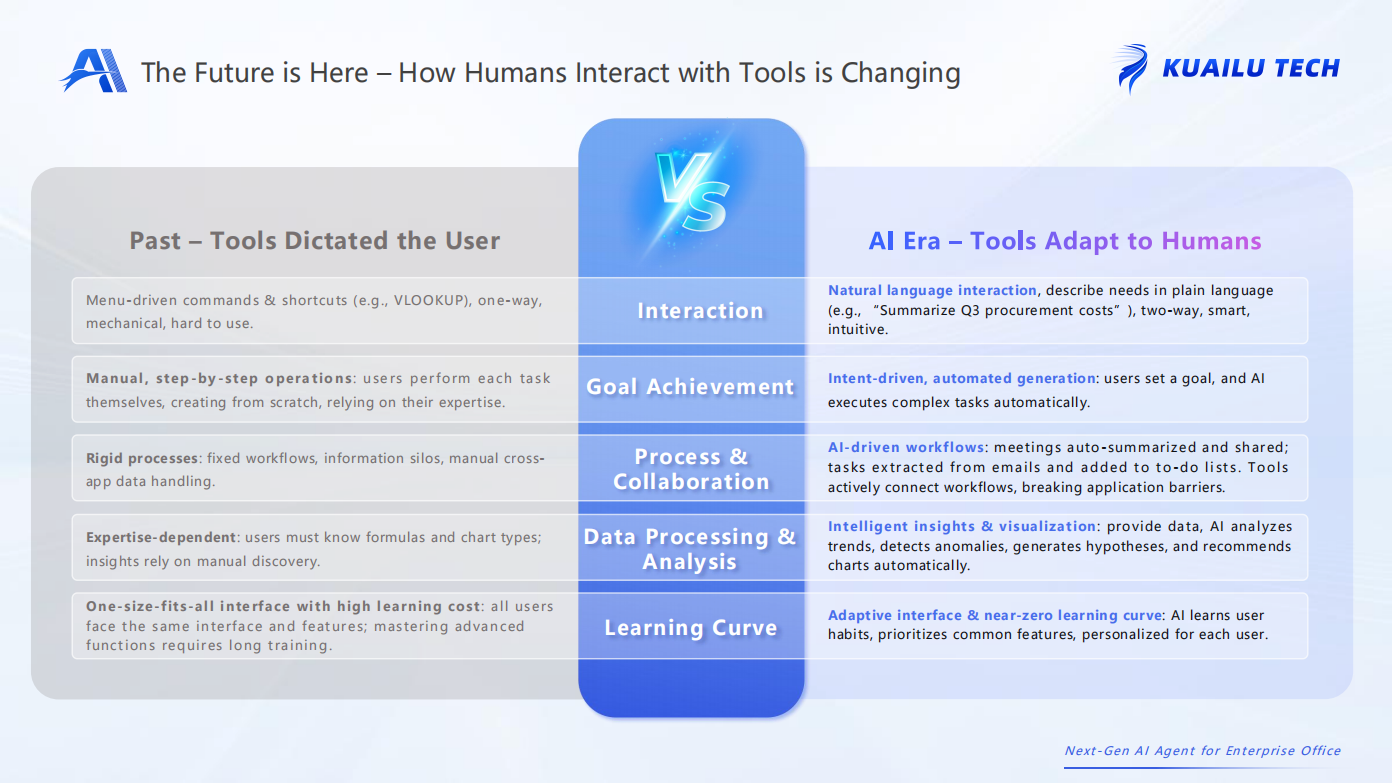
Huang observed that software over the past six decades has functioned essentially as a "system of record"—transforming physical file cabinets into digital databases while the software itself remained passive, awaiting human intervention. Knowledge workers have been compelled to navigate dozens of disparate systems—CRM, ERP, OA platforms—expending enormous cognitive energy simply locating information and completing forms.
The AgaaS era heralds the evolution of software into a "system of engagement." AI agents no longer wait passively for instructions but proactively assume responsibility for data processing, workflow execution, and decision analysis. Huang offered a compelling analogy: "Future enterprises will allocate annual Token budgets to every engineer, just as they allocate computing devices today." This vision positions AI as a genuine colleague rather than a mere tool.
Kuailu Intelligent Office's Implementation:
This vision aligns precisely with Kuailu Intelligent Office's core positioning. Our "Voice-Activated Approval" feature enables users to simply state, "Approve my travel expenses from last week," whereupon the agent automatically retrieves pending approval documents, compares them against budget allocations, identifies anomalies, and requires only final user confirmation. The underlying philosophy: AI handles the legwork while humans make strategic decisions.
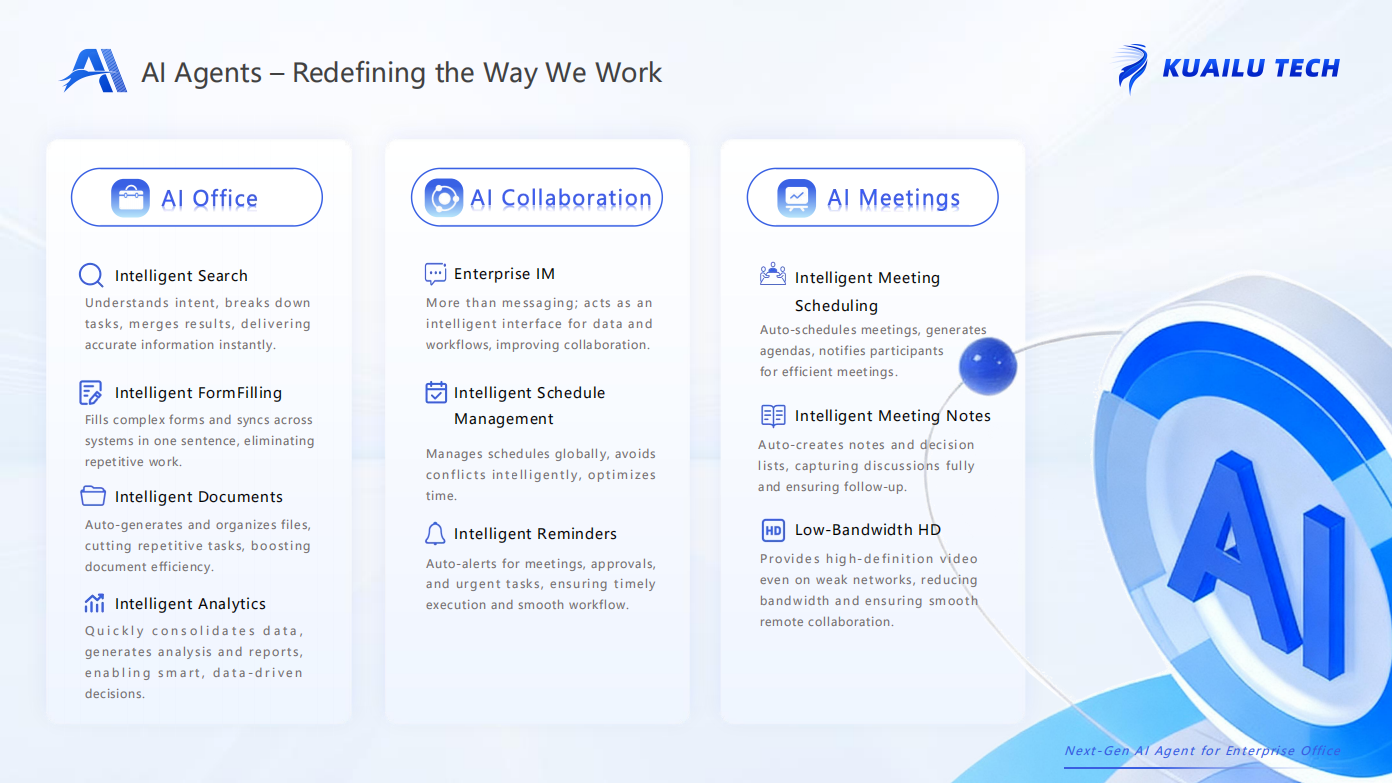
Similarly, our "Intelligent Meeting Minutes" functionality automatically distinguishes speakers, extracts action items, generates comprehensive summaries, and even creates calendar entries and tasks based on meeting content. While seemingly straightforward, these features embody the "system of engagement" philosophy—software evolving from "passive response" to "proactive service."
2. Infrastructure Foundation: OpenClaw and Kuailu's "Operating System" Positioning
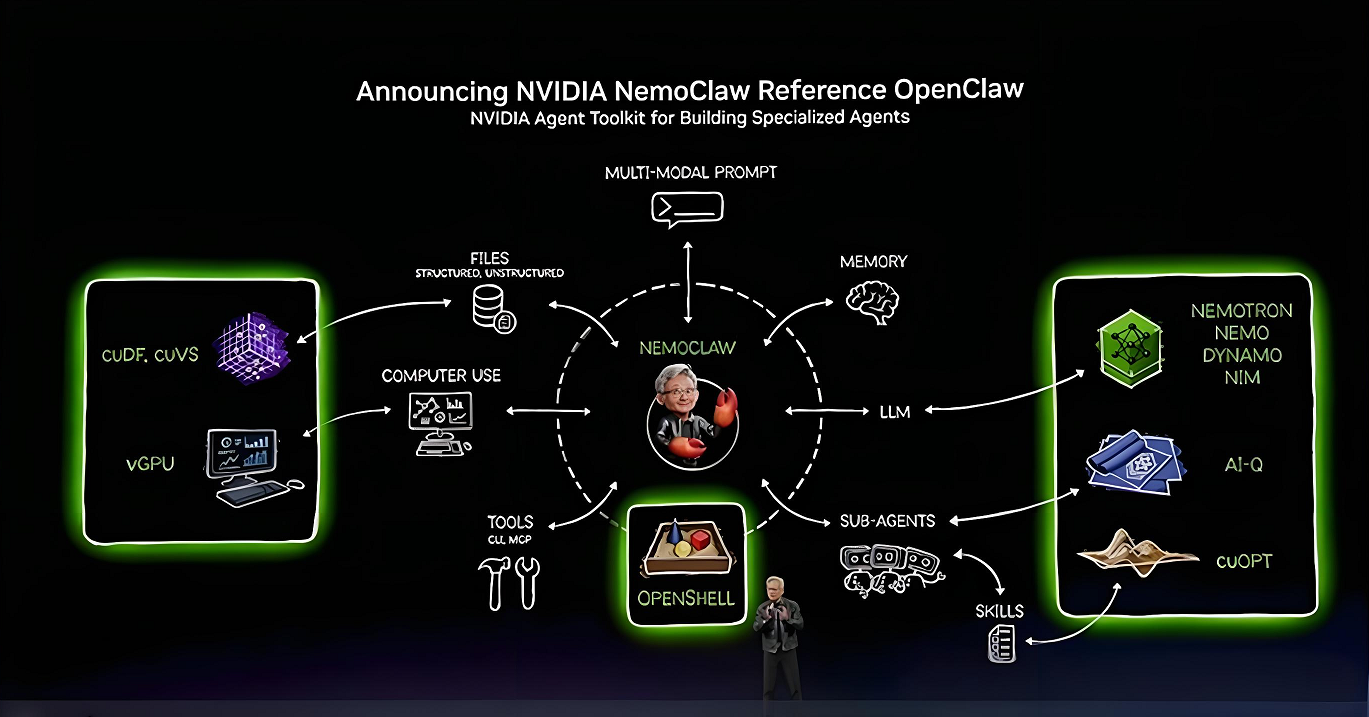
At GTC 2026, Huang dedicated significant attention to OpenClaw, characterizing it as the "operating system" for agentic computing and suggesting its importance has, within weeks, surpassed thirty years of Linux evolution.
OpenClaw's significance lies in addressing the core challenges of the agent era: orchestration and governance. If Linux manages a computer's hardware and software resources, OpenClaw governs the tasks, tool invocations, and data permissions of AI agents. It enables agents to decompose complex assignments, invoke appropriate models, access enterprise data, and execute autonomously within secure parameters. Concurrently, Huang introduced NemoClaw, which augments OpenClaw with enterprise-grade security through policy engines and privacy routers, ensuring data never exits the corporate intranet.
Kuailu Intelligent Office's Alignment:
For enterprise office environments, possessing a powerful large language model alone proves insufficient. Organizations require an environment where "digital employees" can operate safely and reliably. This precisely defines Kuailu Intelligent Office's positioning—an enterprise-grade "workbench" for AI agents.
Within enterprise ecosystems, organizations benefit not only from public AI capabilities but from departmental "digital avatars": sales avatars that automatically generate contracts and manage client follow-ups; finance avatars that analyze budget variances and generate reports autonomously; procurement avatars that conduct price comparisons and initiate approval workflows. How do these avatars collaborate? How do we ensure they operate within appropriate data access boundaries?
Kuailu has architected a security framework encompassing "autonomous deployment, closed-loop management, and robust technical protection," enabling enterprises to harness AI's capabilities while maintaining data sovereignty. This approach resonates deeply with Huang's vision of an "agent operating system."
3. Business Model Evolution: From "Per-Seat Pricing" to "Value-Based Pricing"
Huang's keynote transcended technical discussion to thoroughly examine "Token Economics." He noted that data centers face fundamental power constraints, positioning future competition around "Token throughput per watt." This reframes computational resources—no longer merely backend infrastructure costs but direct production factors linked to revenue generation and individual performance metrics.
He highlighted a remarkable industry development: "How many Tokens are included in your offer? " has emerged as a negotiating point in Silicon Valley recruitment. Organizations now allocate Token budgets to employees based on role requirements, enabling AI capability utilization for task completion. This fundamentally restructures enterprise software procurement logic: traditional SaaS followed per-seat pricing—a static cost model. Future AgaaS will likely adopt pricing based on Token consumption or value generation—a dynamic investment framework.
Kuailu Intelligent Office's Perspective:
For Kuailu, this evolution necessitates helping clients transition their mindset from "IT expenditure" to "productivity investment." When implementing AI agents, enterprises should evaluate not only labor savings but value creation within fixed "compute budgets."
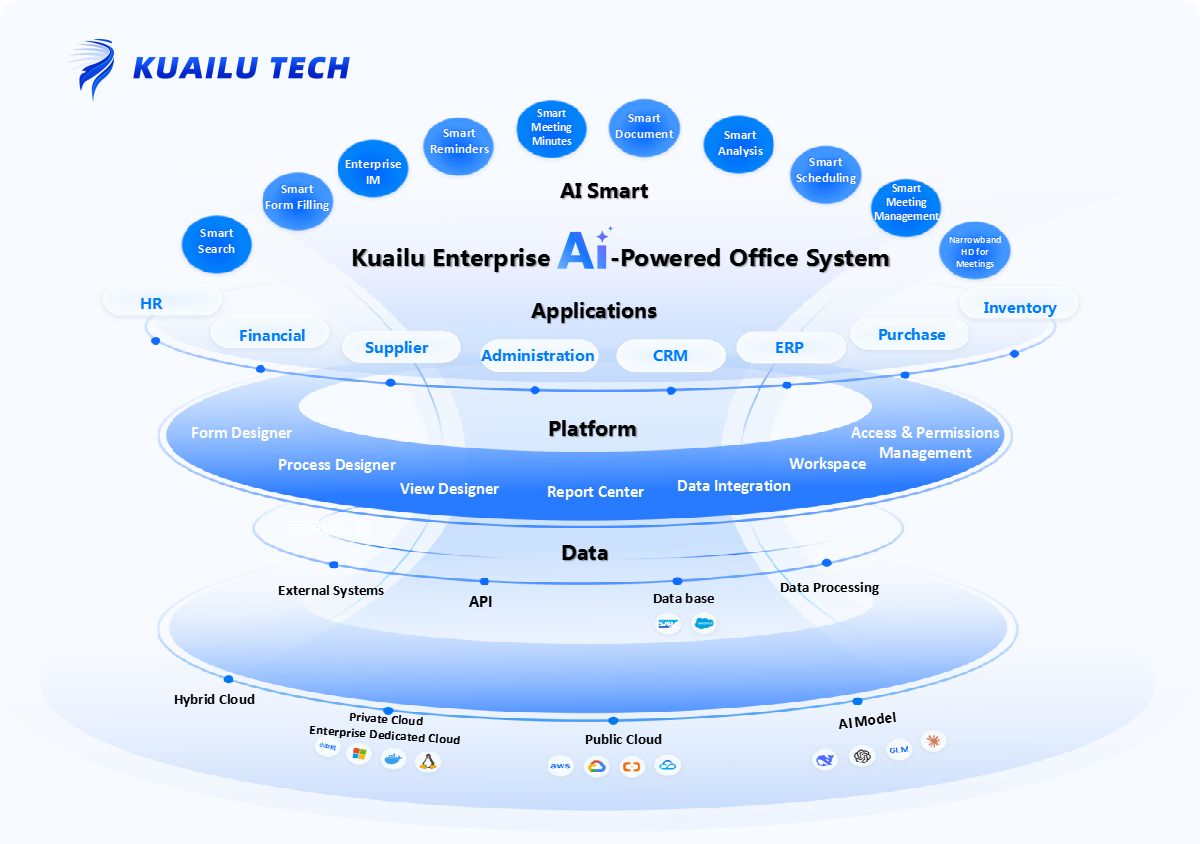
By dismantling internal "data silos," Kuailu enables AI agents executing Token-based tasks to access high-quality structured and unstructured data, generating high-value "intelligence returns." As Huang observed: "SQL and databases aren't disappearing—they're where business facts reside. After AI completes its work, results must be stored back." Kuailu's mission is to ensure seamless "storage" and "retrieval" processes, transforming every Token consumed into actionable business insights and measurable efficiency gains.
4. Kuailu's Mission: The "Last Mile" Implementer
As Huang's vision crystallizes—OpenClaw as foundational infrastructure, Vera Rubin delivering 35x performance improvements, Groq addressing ultra-fast inference requirements—the underlying compute and agent operating systems will progressively standardize. At this juncture, genuine value creation converges at the application layer, within specific business contexts.
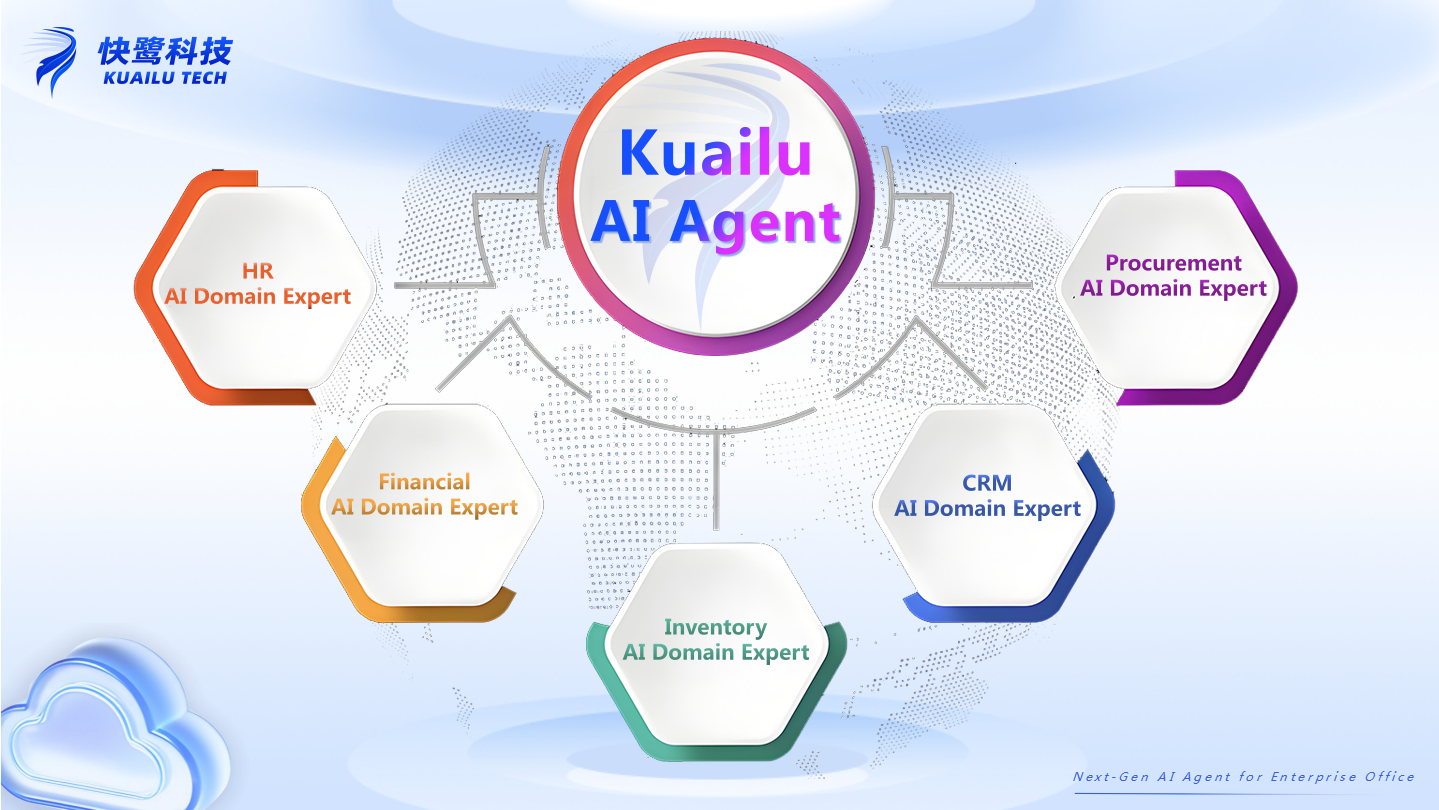
Huang noted that diverse domains—biology, physics, law—require distinct foundational models. Similarly, every specialized office function—HR, finance, procurement, administration, sales—demands deeply customized agents possessing domain expertise.
Kuailu Intelligent Office's Strategic Focus:
By leveraging foundational AI capabilities and integrating them with Kuailu's profound understanding of office scenarios, we create "digital colleagues" with genuine business acumen.
Consider a sales professional's simple instruction: "Generate a contract for this client." The Kuailu agent automatically retrieves client information from CRM systems, selects appropriate templates from the library, populates key terms, calculates applicable discounts, and initiates approval workflows. A finance professional's request: "Analyze this month's budget variances." The agent connects to financial systems, retrieves relevant data, generates visual reports, flags anomalies, and provides actionable recommendations.
Behind these seemingly straightforward instructions lies sophisticated agentic behavior—invoking diverse tools and data sources while simulating human expert thought processes to accomplish complex tasks.