



Forbes Authoritatively Releases: How Artificial Intelligence Will Reshape Our World in 2025
Forbes magazine recently published an article titled "Everyone Must Prepare for the Top 10 AI Trends of 2025," providing an in-depth analysis of the transformations and breakthroughs anticipated in the AI field over the coming year. These trends not only signal rapid technological advancement but also reflect how human society adapts to and faces challenges posed by technological change.

Trend 1: Augmented Working
In 2025, humans will increasingly focus on how to collaborate with artificial intelligence to extend technological capabilities, while freeing up time and energy to concentrate on creative and interpersonal work that machines cannot manage. This is not merely about adding chatbots to various fields; rather, intelligent enterprises will begin leveraging AI to create genuine value. For example, the application of AI visual inspection technology in manufacturing utilizes deep learning algorithms to achieve high-precision quality inspection of production line products. This not only improves product qualification rates but also provides valuable data support for production optimization.
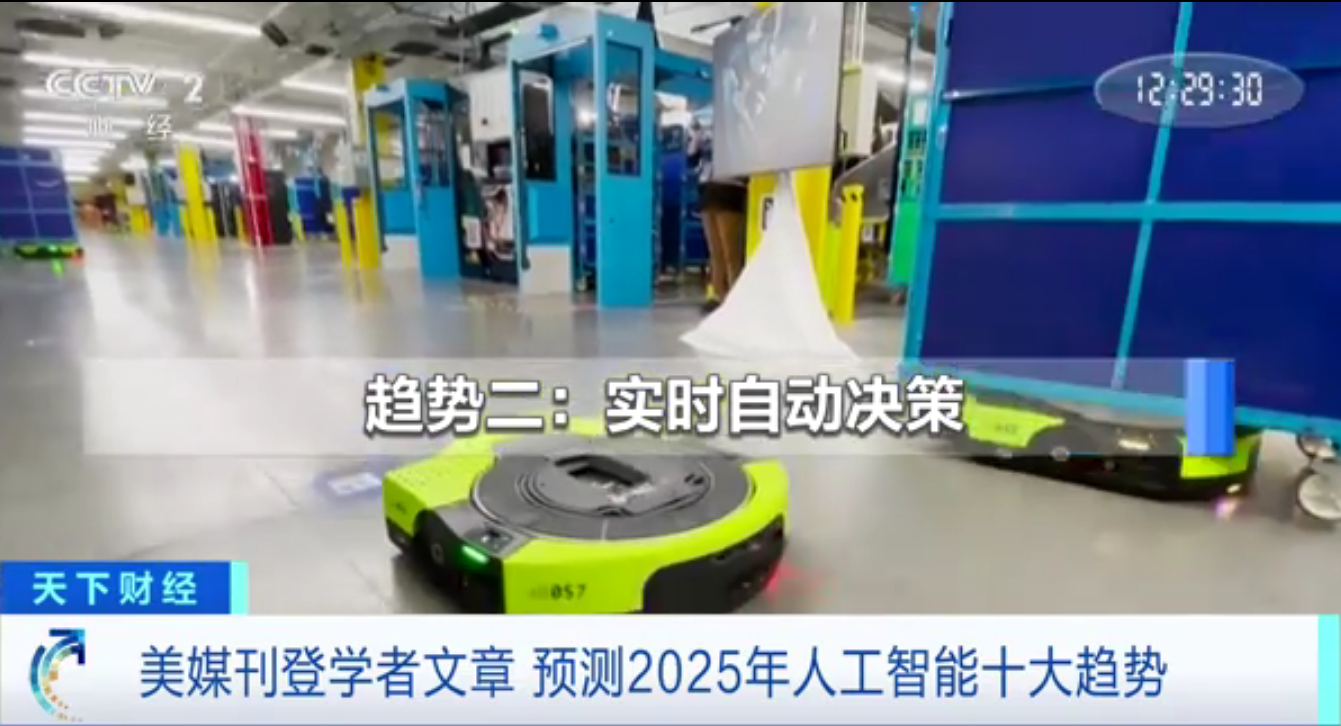
Trend 2: Real-Time Automated Decision-Making
As enterprises strategically address AI challenges, those with more mature AI strategies will achieve end-to-end automation of business processes. Sectors such as logistics, customer support, and marketing will be among the first to benefit, with algorithms making decisions in areas like inventory management and customer inquiry responses. This will lead to higher efficiency and faster market response times. A report released by Deloitte predicts that agents will soon assist supply chain managers, software developers, financial analysts, and others, further driving enterprise digital transformation.
Trend 3: "Responsible" Artificial Intelligence
In 2025, there will be growing awareness of the importance of developing and deploying AI in ways that are ethical, secure, transparent, reliable, and respectful of intellectual property. The European Union and China have already taken the lead in enacting laws to limit potential harms caused by AI, such as criminalizing "deepfakes" and regulating applications in finance, law enforcement, and other fields. More economies will join in legislating AI governance, prioritizing human rights and reducing risks of discrimination and misinformation. Companies that choose to ignore this or take shortcuts will face risks of exposure, regulatory pressure, and user abandonment.

Trend 4: Text-to-Video and Next-Generation Voice Assistants
OpenAI's Sora model has demonstrated the possibility of creating videos from simple text descriptions. In 2025, this functionality may begin to be deployed, revolutionizing the entertainment, education, and training industries. Simultaneously, next-generation voice assistants will become more intelligent, capable of understanding complex instructions and providing accurate responses. Google has already integrated its Gemini chatbot into mobile devices, replacing the "Hey Google" function. In the future, these capabilities will appear in more devices, enabling more natural and meaningful voice communication.
Trend 5: More Comprehensive AI Legislation and Regulation
As AI technology becomes more widespread, demands for its development and deployment to be ethical, safe, transparent, and reliable will increase. In 2025, the international community will host numerous related events to discuss the prospects and norms for AI development, promoting the refinement of AI legislation and regulation. This is not only about the technology itself but also concerns the harmony and stability of human society.
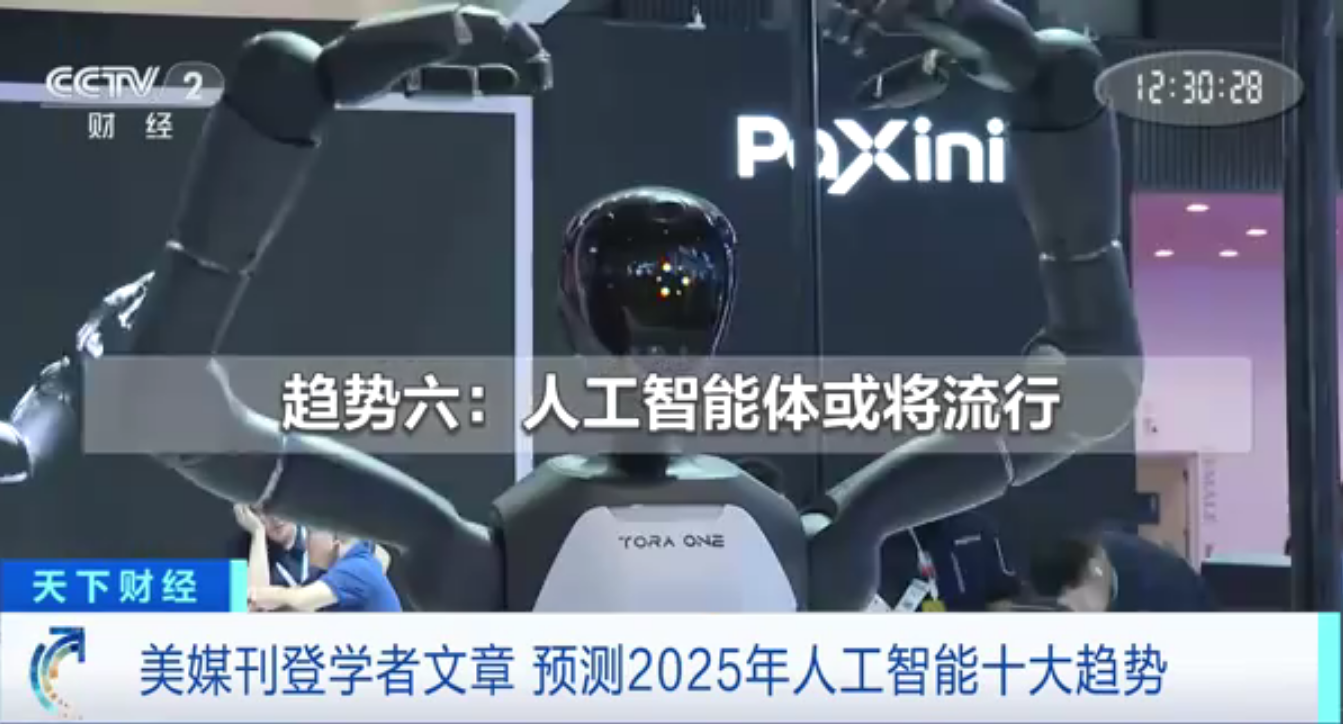
Trend 6: AI Agents May Become Popular
Agents are intelligent systems capable of operating without precise instructions. They can string together countless tasks and adjust their behavior based on outcomes. This is seen as a significant step towards achieving General AI. Tesla's humanoid robot "Optimus" can already walk in factories and sort batteries, with potential for small-scale production and deployment in 2025. The widespread adoption of agents will greatly liberate humans from repetitive and mundane tasks, driving a leap in social productivity.

Trend 7: A "Post-Truth" World
The proliferation of fake content and misinformation brought about by AI has become a severe global challenge. In 2025, society will begin addressing this challenge through legislation, education, and enhancing public identification capabilities to reduce the spread of false information. Meanwhile, AI will play an increasingly important role in cybersecurity and national defense, helping to detect and defend against cyber threats and protect national security.

Trend 8: Quantum Artificial Intelligence
Quantum computing could bring revolutionary changes to AI. By utilizing the peculiar properties exhibited by materials at the subatomic level, it can perform computational tasks at unprecedented speeds, allowing algorithms to run millions of times faster than on standard computers. This would not only make AI faster but could also enable entirely new tasks, opening up new possibilities in areas like vaccine development and the production of new materials and energy sources.

Trend 9: Sustainable Artificial Intelligence
Cloud-based AI systems consume vast amounts of energy. In 2025, data centers will shift towards sustainable and renewable energy sources. At the same time, AI applications will help enhance sustainability and reduce the environmental footprint of other industries. Using algorithms to optimize agricultural water and pesticide use, guiding urban traffic more effectively to reduce vehicle emissions—AI will become a powerful tool for environmental protection.

Trend 10: Widespread Application of Multimodal AI
Multimodal AI, which integrates capabilities such as text, images, and video, will become a primary driver of AI adoption by enterprises. In healthcare, multimodal AI advances personalized medicine by analyzing medical records, imaging data, genomic information, and more. Its applications will also expand in retail, financial services, manufacturing, and other fields. The latest reasoning models released by OpenAI and Google have demonstrated performance surpassing some human experts in complex problems involving mathematics, programming, and scientific Q&A, indicating AI's vast potential in scientific research.